
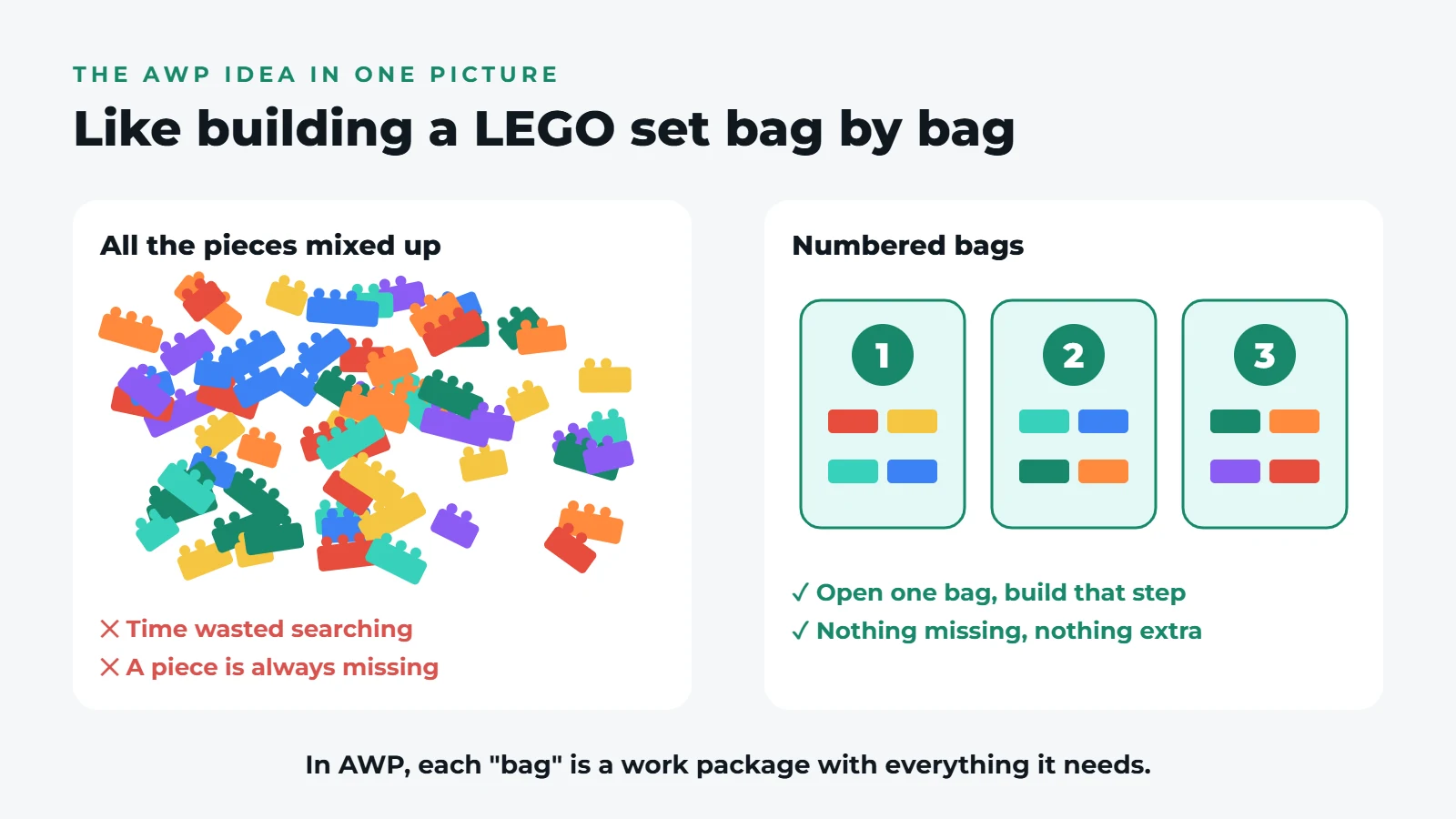
Have you ever built a big LEGO set? If you open the box and dump all the pieces on the floor, it takes hours to find each one. But LEGO sets come in numbered bags: you open bag 1, build step 1, and so on. You never miss a piece and never have one left over. AWP is exactly that, but for building a construction project.
What is AWP?
AWP stands for Advanced Work Packaging, which means preparing the work in packages, ahead of time.
The idea is very simple: before workers start anything on site, a “package” is prepared with everything they need: drawings, materials, tools and permits. Only when the package is complete does construction begin.
Why does it matter?
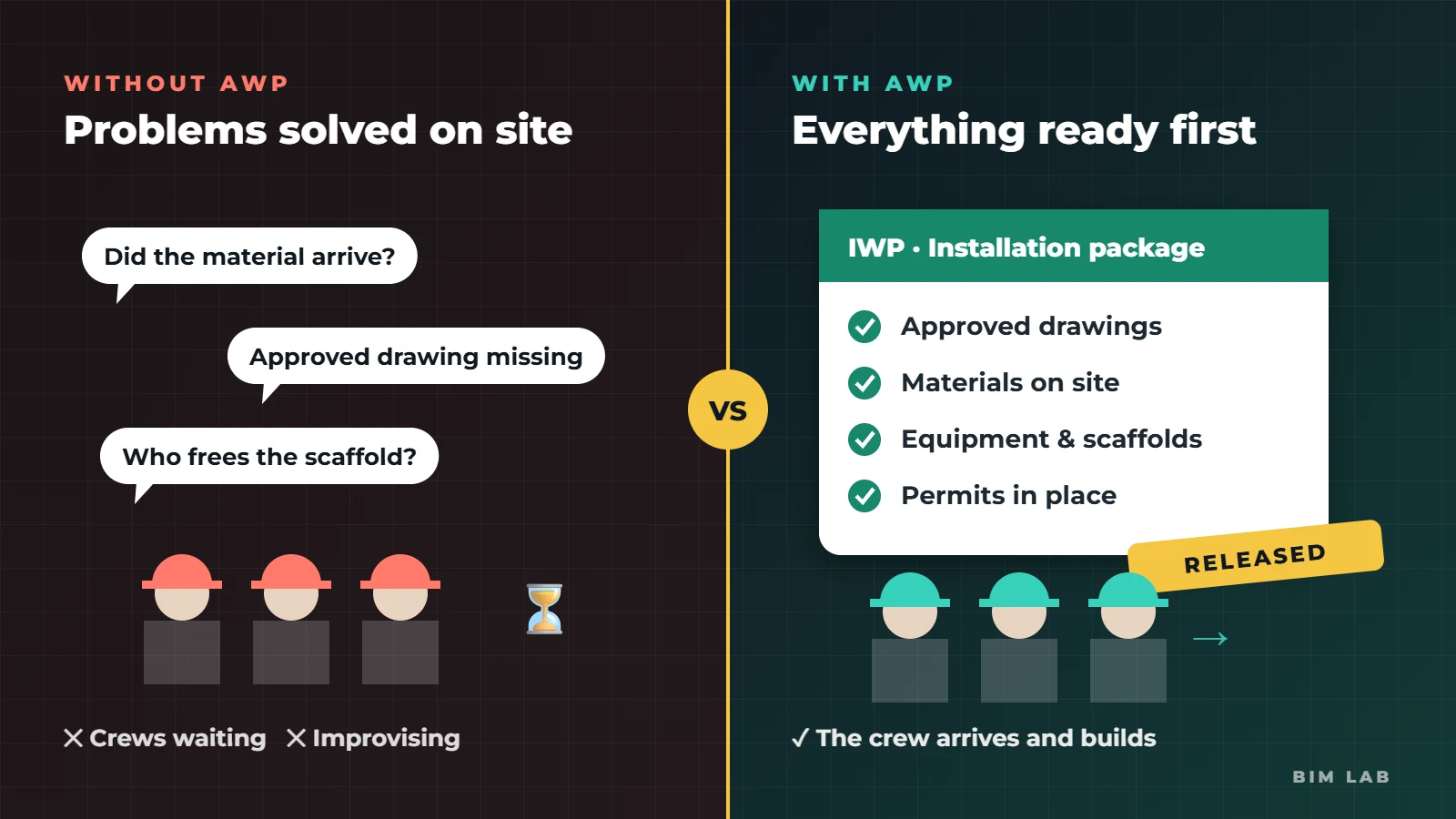
Because on large projects it often happens that a crew shows up to work and can’t: a drawing is missing, the material hasn’t arrived or the area is taken by another crew. So everyone waits. Those waits, repeated many times, make projects run late and cost more.
With AWP, those issues are solved beforehand, in the office, not when people are already on site.
The AWP “bags”
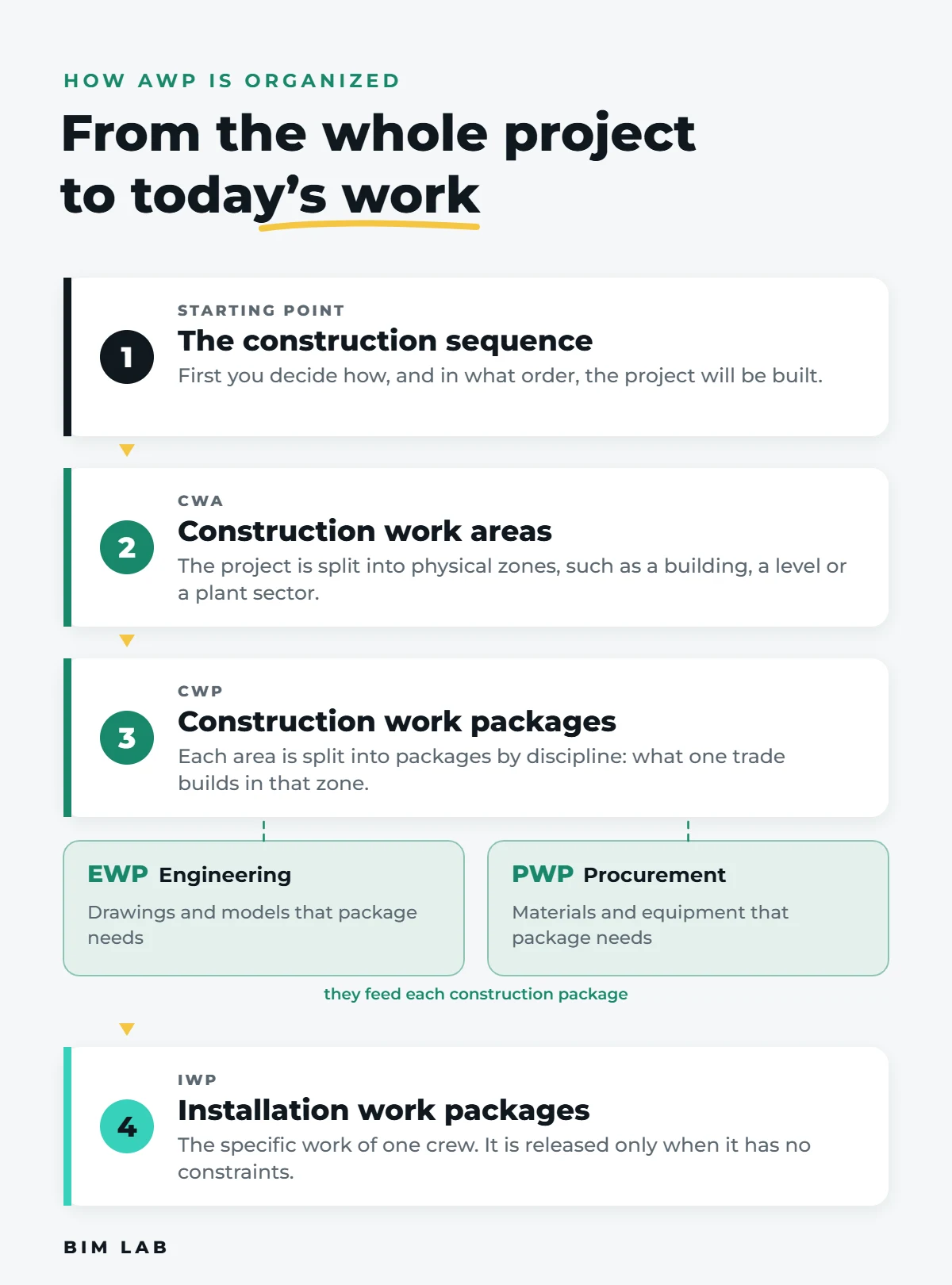
Just like LEGO, AWP organizes the project from the biggest piece to the smallest. Each level has an acronym, but the idea is easy:
- First, the build order: you decide what gets built first, next and last. It’s like reading the manual before you start.
- CWA – the zones: the project is split into zones, such as a building or a floor. Like the big parts of a LEGO set: the house, the garden, the car.
- CWP – the packages in each zone: what each discipline builds in that zone, for example the structure or the electrical work.
- EWP and PWP – drawings and purchases: the drawings that package needs and the materials that must be bought for it.
- IWP – the final bag: the specific work one crew does in a few days, with everything ready to start.
The golden rule
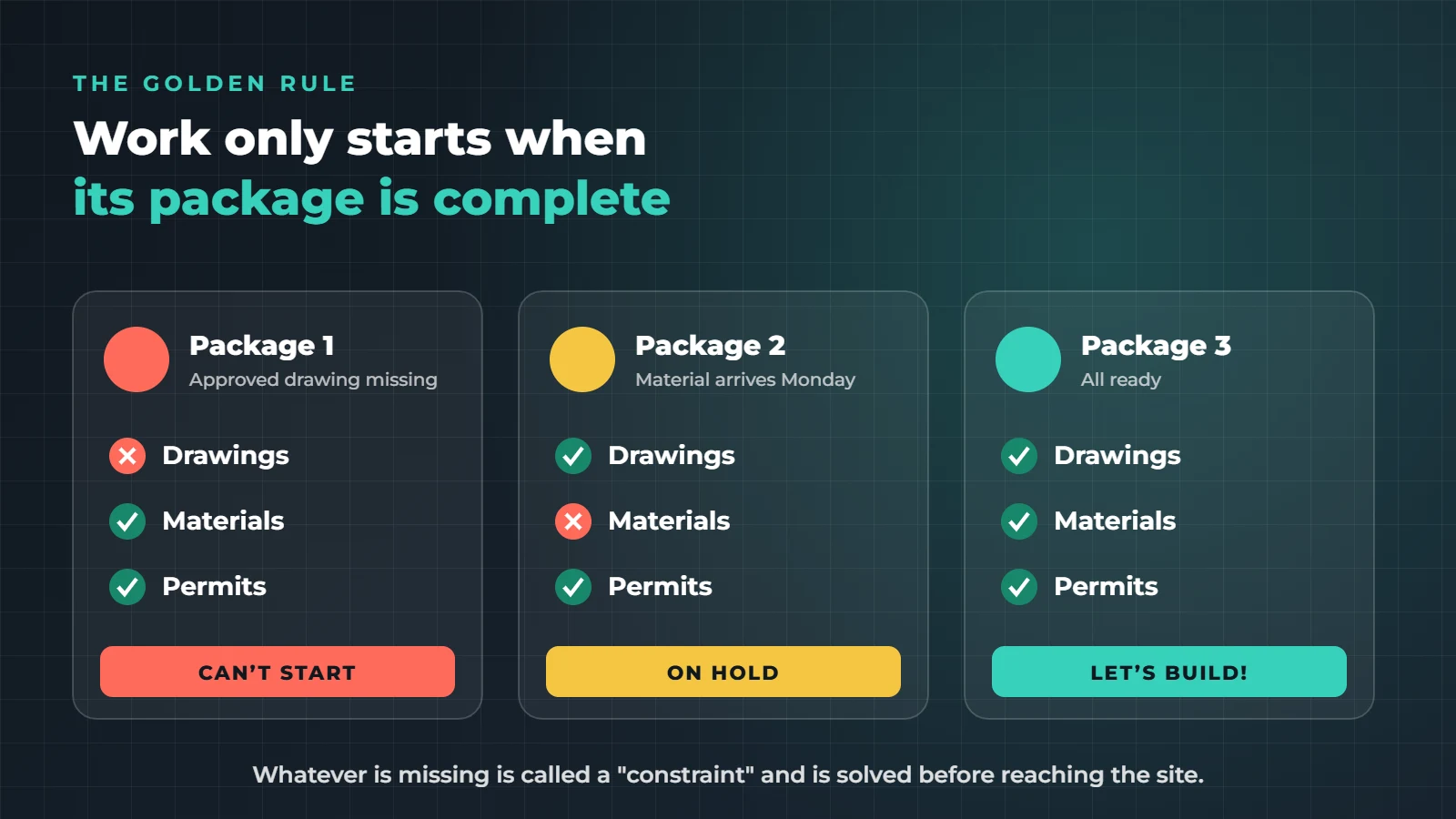
Work doesn’t start until its package is complete. If something is missing —a drawing, a material, a permit— that’s called a constraint, and it has to be solved first. That way the crew arrives, works without stopping and finishes.
What does it have to do with BIM?
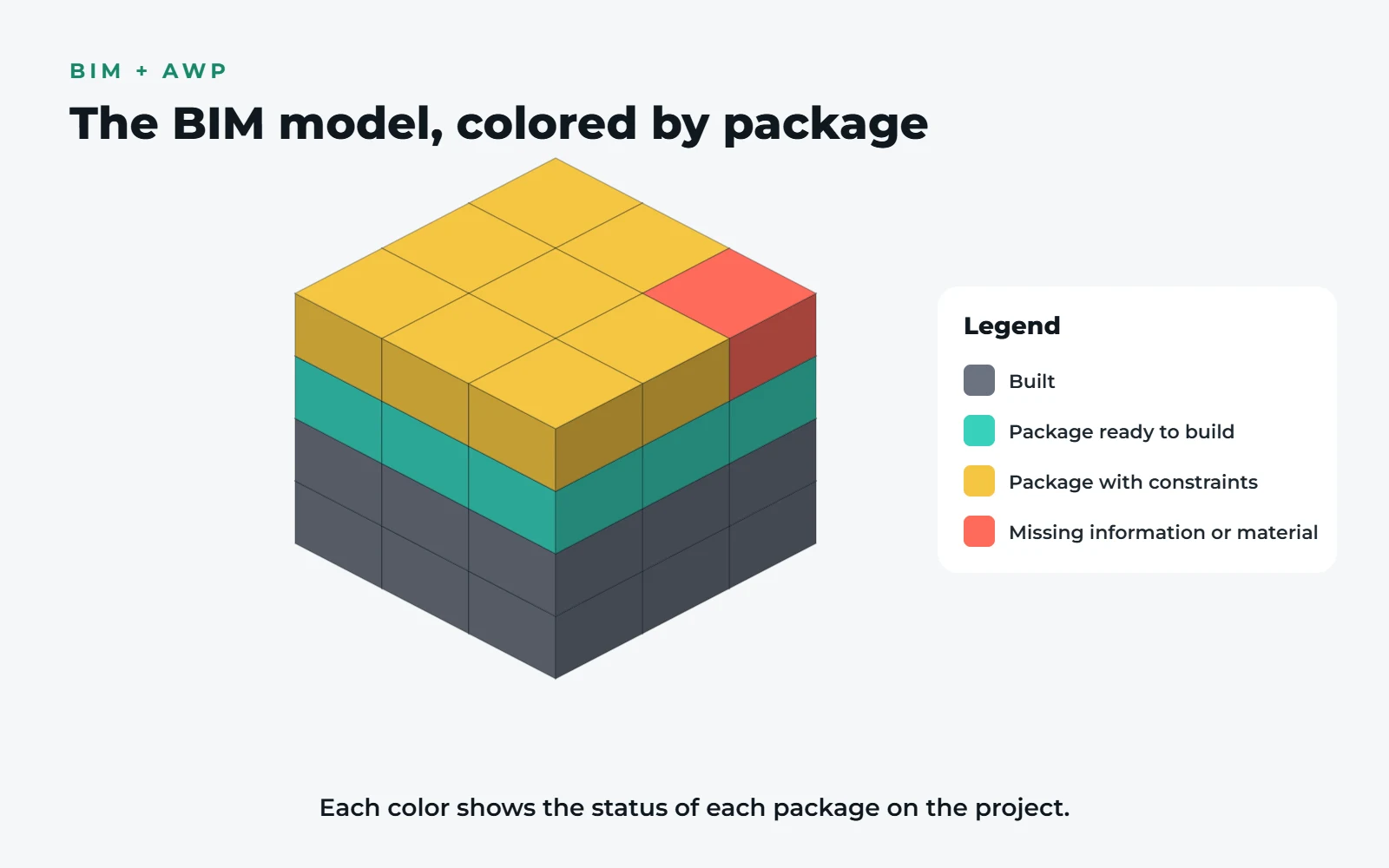
BIM is a digital model of the project, like a scale model on the computer. With that model it’s much easier to build AWP packages: you can see which pieces belong to each package, how much material is needed and in what order things are built. You can even color the model to see which packages are ready and which still have something pending. To learn more, read what is BIM.
Where is it used?
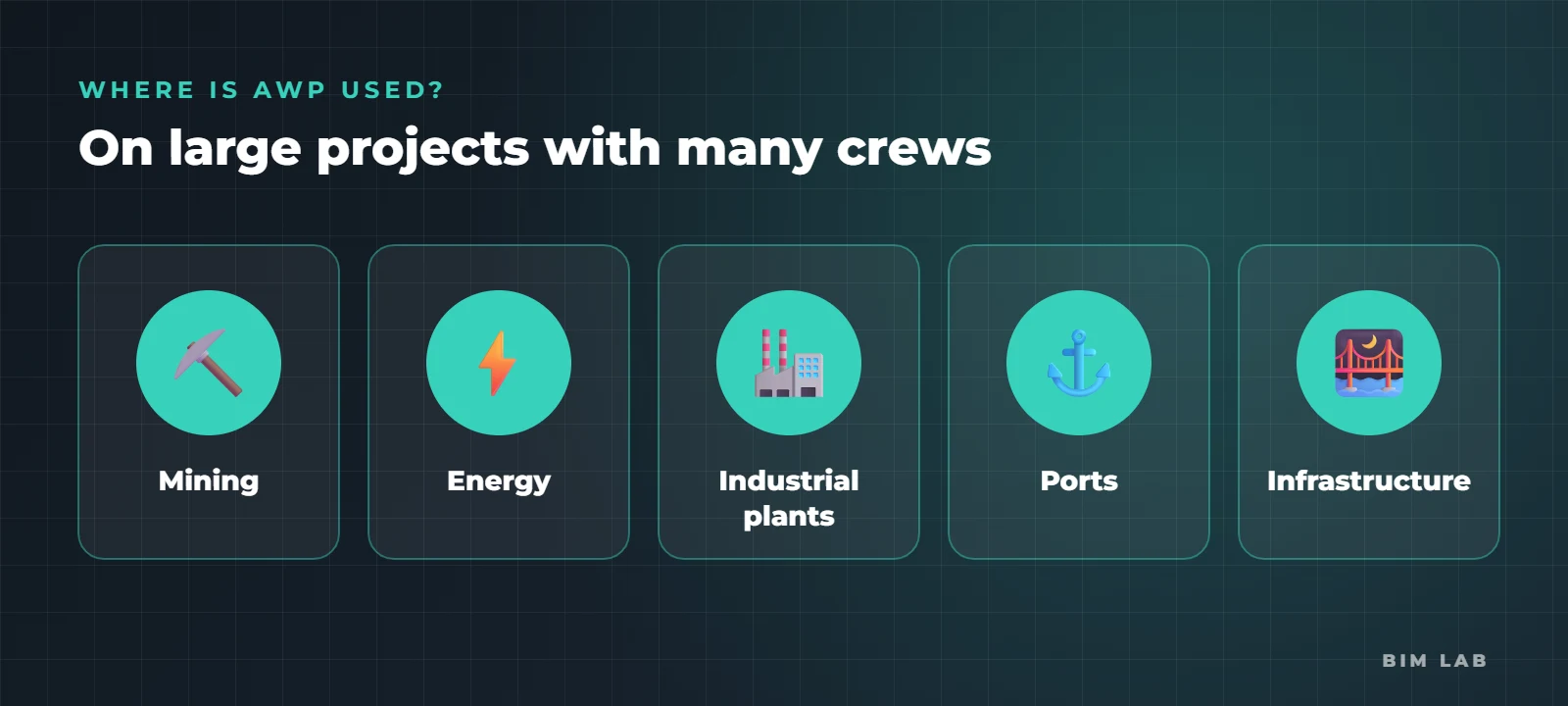
Mostly on large projects where many crews work at the same time: mining, energy, industrial plants, ports and infrastructure.
What is an EPC contract?
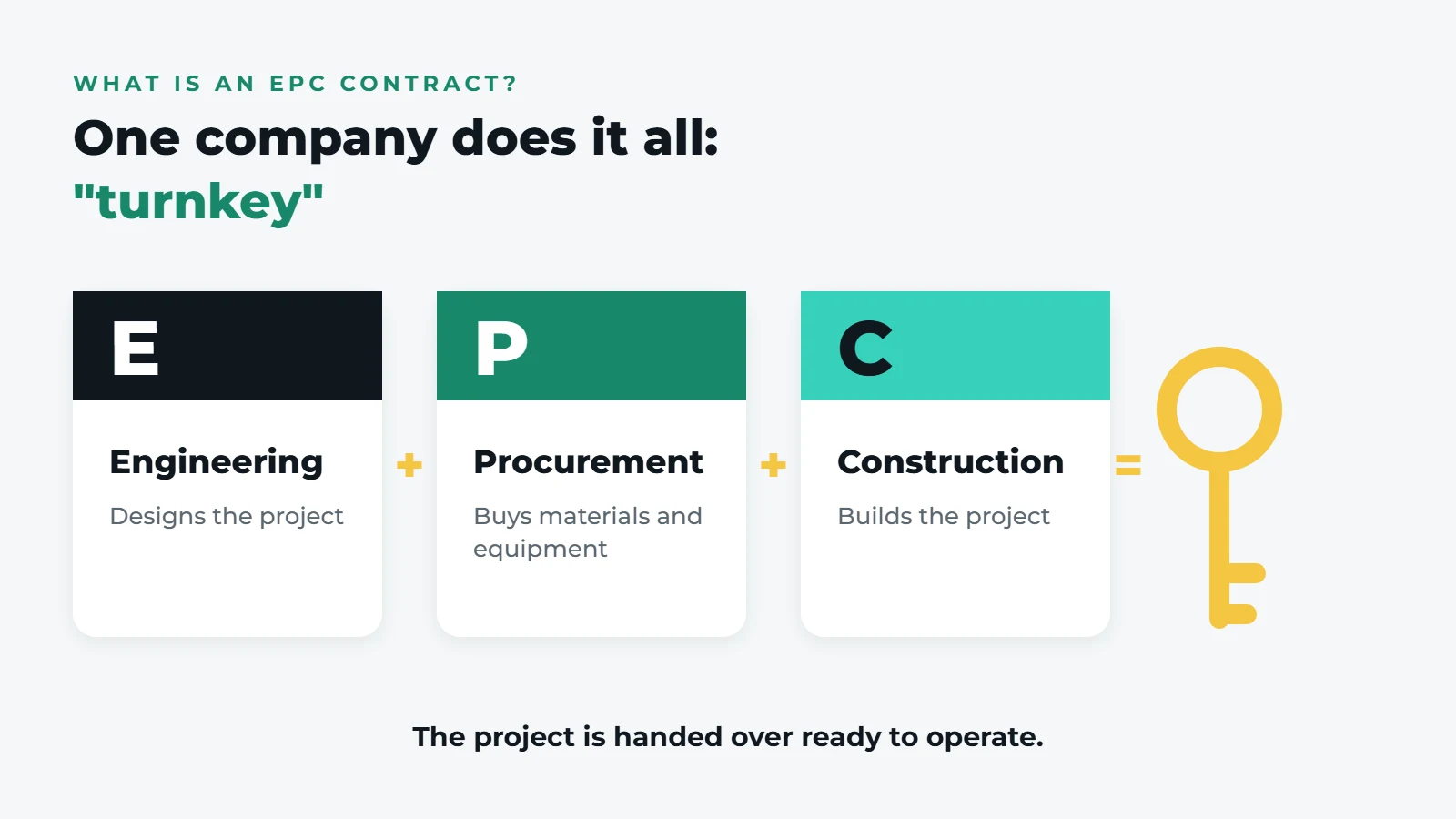
AWP is widely used in EPC contracts, which stands for Engineering, Procurement and Construction.
It’s a “turnkey” contract: one single company takes care of everything. It designs the project, buys the materials and builds it, until it’s handed over ready to operate. Because that company handles all three stages, AWP helps make sure design and purchasing arrive right on time for construction.
In short
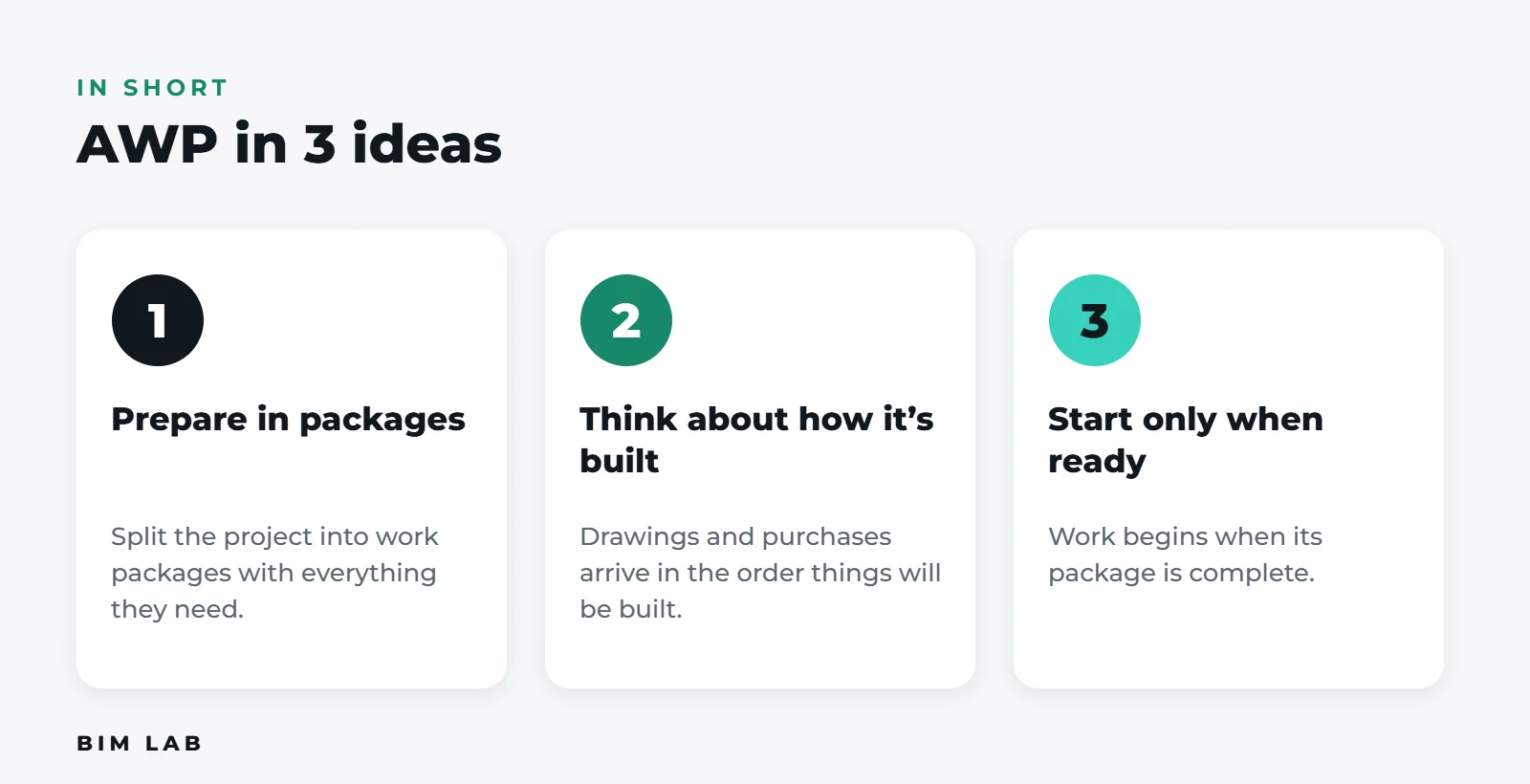
- AWP means preparing work in packages, with everything it needs.
- Planning is based on how the project will be built.
- Work only starts when its package is complete.
Sources and references
- Construction Industry Institute (CII). RT-272: Advanced Work Packaging: Design through Workface Execution. construction-institute.org
- Construction Industry Institute (CII). RT-319: Making the Case for Advanced Work Packaging as a Standard (Best) Practice. construction-institute.org
- Construction Owners Association of Alberta (COAA). WorkFace Planning. coaa.ab.ca
Is your project going to be planned in work packages? At BIM LAB we support you with coordinated BIM models organized for construction through BIM Execution. Let’s talk.